
Trans+ Guidelines
Transgender researchers face substantial inequity and risk when undertaking fieldwork. The guidelines on this page expand upon the PRIDE Guidelines for LGBTQ+ Inclusive Fieldwork by focusing specifically on the inclusion of trans+ identities.
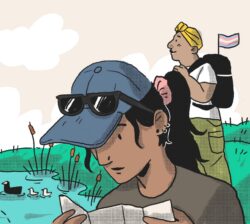
These guidelines were created through a series of focus groups with trans+ researchers and self-described allies, as part of the Pathways: Participatory Approaches to Trans-Inclusive Field Research project. The project was facilitated by and developed in collaboration with Dr Robin Hayward, who is a trans science communicator and scientist, and who consulted on the trans-inclusivity of the project throughout. The project was led by Professor Martin Zebracki, in collaboration with Dr Tilen Kolar, and was funded by the Research England Enhancing Research Culture Fund.
These guidelines use the term 'trans+' to refer to all identities under the trans umbrella, which may include non-binary and gender non-conforming or gender questioning identities, as well as binary transgender identities. The term ‘fieldwork’ is used to describe any work carried out beyond a researcher’s home institution. Fieldwork can be conducted nationally or internationally and can involve travelling to places that are new or familiar, local or remote, rural or urban. Fieldwork may also include conference attendance and visiting other institutions on a temporary basis.
The video below explores trans+ inclusivity in fieldwork and how support can be provided by institutions. A transcript of the video will appear in the sidebar when selected. A printable PDF of these resources is also available, covering all the guidance from this web page and the video.
Guidelines for Trans-Inclusive Fieldwork
Trans+ researchers commonly face barriers to safe, inclusive, and equitable participation in fieldwork, necessitating additional support and understanding from colleagues and supervisors. The needs of trans+ researchers are both physical and psychological and will vary substantially between individuals, as well as being likely to change for individual trans+ people over time. For example, trans+ people who choose to medically transition may have different needs from those who only transition socially; trans men may have different needs from trans women; and researchers who can choose whether to disclose their trans+ identity may face fewer immediate risks than researchers whose transness is more apparent. However, despite this diversity of circumstances, the practical needs of trans+ people are rarely unique.
 In most cases, the needs and reasonable adjustments required by trans+ people are not specific to their trans+ identity and may also support other characteristics (e.g. disability and mental health). This means that adjustments for trans+ researchers can be integrated with existing pathways to access support for other minoritised groups, or where the trans+ researcher has intersecting identities. It is important to bear in mind however that trans+ people may assume resources are not available to them unless they are explicitly highlighted as a group who can access support. Low expectations and distrust of institutions can lead to trans+ people not seeking any support at all, unless these pathways are appropriately signposted and managed.
Things to Consider
Unfortunately, there is no one-size-fits-all guide to supporting trans+ fieldworkers.
Every trans+ person is different and so is every field project.
The best way to support a trans+ researcher is inevitably to speak with them and to ask what support (if any) they would appreciate. This should not be done in a group setting (email may be preferred to avoid putting them on the spot) and conversation should focus on practical help that can be given, not on the trans+ person's identity or transition. Respect that their willingness to talk may vary depending on the day/context and that this conversation is a mechanism to help the trans+ researcher, not to satisfy your own curiosity.
Providing as much information as possible, as soon as possible, about the trip, accommodation and facilities, and available support can also help to reduce uncertainties and give trans+ researchers greater ability to plan ahead (note: making this kind of information easily available early on will also help researchers with other access needs).
Although every trans+ researcher will face different challenges, it may be valuable to consider the list of common issues below. This is particularly true for those organising group field projects where there may be undisclosed trans+ identities within the team, as well as for first-time trans+ field researchers who may not know what to expect from fieldwork or what challenges they might anticipate.
Anxiety
Anxiety can be a substantial burden before, during, and after fieldwork, even in cases where no material difficulties arise.
you have that anxiety right the way in the lead up to the trip, like am I going to go? Am I not going to go? I think the first time it came up, I did just self-select and be like, I'm not going to go at all.
Many fieldworkers and potential fieldworkers will remove themselves from trips and activities due to a perceived lack of support or the perceived difficulty of engagement with the activity. Uncertainties surrounding accommodation, toilet facilities, schedules, dress codes, inclusive cultures etc. can create substantial anxiety, regardless of any uncommunicated efforts to make these elements less exclusive. Communicating information clearly (without any ambiguous terminology) and far in advance can help to reduce anxieties and make it more likely that trans+ researchers will take part in fieldwork.
Organisers may commonly prefer to leave solutions until the last minute and try to troubleshoot issues as they arise in real time. This is not appropriate and may lead to trans+ people removing themselves from the situation in advance and/or experiencing increased anxiety.
Asking for Support
For trans+ researchers, asking for support can mean putting themselves at risk and othering themselves from the group. In many cases, seeking or receiving support may risk 'outing' a trans+ researcher in situations where they would prefer not to share that part of their identity.
Others in the group may also believe that trans+ people are pursuing a political agenda or asking for overly difficult accommodations when they try to self-advocate. Like other minoritised groups, trans+ people may also experience guilt when requesting accommodations to support them and may therefore try to compromise in advance or minimise their needs.
It’s like having a political bias put on you just for existing… I’m under constant scrutiny for really doing nothing
Instead of requiring self-advocacy for basic trans-inclusive practices, these should be baked in to all fieldwork, regardless of visible identities. Where this is not practical, access to support should be made available via pathways that do not require fieldworkers to out themselves as trans+ and which are available to all.
Any physical needs should be accounted for without medicalisation, stigma, or singling out trans+ fieldworkers. Support should be given with a focus on practicalities, and boundaries around the extent to which trans+ individuals are willing to divulge information on their personal physicality and needs should be respected (asking for support should not require fulfilling someone else's curiosity about trans+ people).
Risk Assessments
Risk assessments commonly fail to include hazards relating to the researcher's personal identity. For example, a risk assessment may highlight the presence of bears at a field site and suggest appropriate mitigations (e.g. bear spray), but it may fail to assess the risk of being transgender in a space or culture where the researcher is at greater risk of abuse and violence from the public. These risks should be considered for all field research and mitigated as far as possible (e.g. selecting alternative field sites); however, it is important that the final decision on whether to proceed be the trans+ researcher's, with as much information and support as possible available to them.
Although it is important to accurately assess and mitigate risks for trans+ researchers, care should also be taken to ensure that trans+ researchers are not othered by this process.
Am I a high-risk event?
Paperwork surrounding fieldwork can be frustratingly vague where it tries to encompass a huge variety of potential scenarios. Often, there is limited support for trans+ researchers trying to complete paperwork accurately, while figuring out where their identity fits in and to what extent reactions to that identity might constitute additional risk that the institution should be made aware of.
One example that was raised in focus groups highlighted that there are additional paperwork and security requirements for 'high-risk' or 'contentious' events. It had been unclear, to both the researcher and those they had asked for support in completing the paperwork, whether or not their trans identity made their work inherently high-risk or contentious, given current political and media narratives around trans people. This lack of clarity necessitated greater emotional labour, more time spent on paperwork, and a barrier to access that could prevent work from being undertaken by trans+ researchers.
Contextual Visibility
Depending on the context, trans+ people may be comfortable with different levels of visibility. It is important to refer to people in the way they would prefer (using their preferred names and pronouns), but colleagues should also be aware that this may change in different contexts. There may be a number of reasons for this variation, ranging from social comfort to physical safety, but trans+ researchers should always be the ones to decide how they want to be referred to and how visible they want to be.
For example, a trans+ researcher may be comfortable discussing their gender and their needs with a trusted colleague but may not wish for their trans+ identity to be referred to in group spaces. Or, a trans+ researcher might present their gender one way at their home institution but choose to present a different way during fieldwork, particularly in locations where being identified as trans+ would present a risk to their safety.
Trans+ researchers may experience stress around both visibility and invisibility during fieldwork. Visibility can lead to substantial risks and anxieties around how the researcher might be discriminated against, while invisibility (by hiding their trans+ identity) may cause a trans+ researcher to feel severe dysphoria (mismatch between their gender identity and the sex assigned at birth) and to be excluded from their gender. The effect of these different visibility levels on mental health should not be underestimated, particularly during longer field campaigns.
Toilets
Safe and inclusive access to toilet facilities is vital to trans+ inclusion in fieldwork, as well as in day-to-day life. Unfortunately however, the extent to which trans+ researchers may be able to access these spaces is increasingly limited in countries like the UK, where toilet access has been made a subject of intense public and political debate. Because of the rapid pace at which this subject is evolving, these guidelines are unable to give clear advice on legal responsibilities and limitations (the authors advise consulting specific up-to-date guidance elsewhere). Instead, these guidelines highlight considerations for trans-inclusive fieldwork at the time of publication (September 2026) and as directed by focus groups.
Trans+ researchers should be supported to use whichever toilet facilities they prefer. There should be no barriers put in place to them doing so and no interrogation of their gender in order to access these spaces. The decision should be made purely by the trans+ researcher and they should never be forced to use a single-sex space which does not align with their gender.
When organising fieldwork, toilets should be considered as a location in which trans+ researchers are at greater risk of verbal or physical abuse. Because of this risk and heightened awareness, trans+ researchers may avoid using the toilet altogether in public places, causing discomfort and risks of other health issues. When they do use the toilet, this may be a far more stressful activity than for their cisgender peers (who identify with their sex assigned at birth).
I am so stressed when I have to use a public toilet. I try to get in and out as fast as possible and try not to use the toilet at all if I think someone else might already be in there.
Some stress around using toilets may be reduced for trans+ researchers by clear advance knowledge of the available facilities, as well as any barriers or support required to access them. This information can help with planning and reduction of stressful uncertainty.
Some trans+ researchers may feel more safe or comfortable using a gender-neutral or accessible toilet. Availability or absence of these facilities should be made clear in advance of fieldwork; however, there should be no expectation for trans+ researchers to use these if they would prefer to use the toilets associated with their gender. Organisers should also be aware that many of these toilets in the UK are kept locked and may require a RADAR (NKS) key to access them. RADAR keys can be easily purchased online.
When conducting fieldwork outside the UK, it is important to note that toilet access may be different, and organisers should try to be aware of any local guidance. In countries that are more inclusive than the UK, trans+ researchers who have become acclimatised to conditions in the UK may benefit from being made aware of their relative safety; however, they should still not be pressured to use any space in which they are uncomfortable. In countries with additional safety concerns, these should also be noted and gender-neutral facilities may be less available. Depending on the country, accessible toilets may be absent or nested within binary gendered spaces, removing their functionality as a gender-neutral third space.
Accommodation
Accommodation during fieldwork may exclude trans+ researchers when divided into male and female spaces. Ideally, all fieldworkers should be provided with their own individual accommodation, including toilets and bathroom facilities; however, these guidelines recognise that finances or the logistics of available accommodation at some field sites might make this impractical.
Where possible, shared accommodation should not be automatically divided by gender. Instead, fieldworkers should be allowed to determine their own groupings, based on the available spaces. Field sites that enable this kind of gender-neutral allocation of accommodation should be prioritised over sites with only male or female accommodation. Single-sex accommodation should remain available upon request.
In scenarios where gendered accommodation cannot be avoided, trans+ researchers should be supported to use the accommodation in which they feel most comfortable. If they would prefer to have their own individual room and other facilities, these should be provided for them; however, this should only be done at the request of the trans+ researcher and not without consulting them. It is worth noting that specifically excluding one person from group accommodations when everyone else is sharing can result in the othering of that person, potentially outing them as trans+, and loss of informal networking or social opportunities in the accommodation.
If another person in the same gendered accommodation as a trans+ researcher requests that they would prefer not to share that accommodation with a trans+ person for any reason, that request should be resolved by providing an alternative room for the person who has requested the change. Trans+ researchers should not be removed from gendered accommodation in cases where it would be as easy for those who are uncomfortable with their presence to be moved elsewhere.
In many cases, trans+ researchers will opt out of gendered accommodation, even when the option is given to them.
I feel that I'm not ever truly going to be welcome there. Because even if 90% of people are okay with me using the facilities I want to use, that 10% of people or 1% of people not being okay with that is quite a mental burden to carry.
Concerns by trans+ researchers that they are unwelcome or may be making someone else uncomfortable are often sufficient for the trans+ person to remove themselves from the situation. This may be by removing themselves from the gendered accommodation, or by declining to attend the fieldwork entirely.
Trans+ people are likely to be highly aware of the risks they face when using single-sex spaces. Even a single objection to their presence in a space may lead to verbal or physical abuse during the fieldwork, exclusion from aspects of socialising and research, and potentially national media coverage and legal harassment of them as an individual. Trans+ fieldworkers may fear for their privacy, their safety, their job, their financial security, and their freedoms when deciding on which accommodation to use. Even if the likelihood is low, the uncertainty of the outcome may lead trans+ researchers to avoid the risk by opting out of fieldwork.
Organisers of fieldwork can mitigate some stress and uncertainty for trans+ researchers by communicating accommodation arrangements early in the planning process, as well as the support and options available to anyone with additional needs. For relatively local fieldwork, organisers may wish to consider whether an overnight stay is the best option or whether travelling to the site each day may be preferred by some researchers (e.g. those with caring responsibilities).
Clothing
Many fieldworkers will wear different clothes during their research than they would typically wear at their home institution. This can present a range of difficulties.
One of the most common difficulties for fieldworkers, particularly when it comes to specialist outdoors clothing, is the expense. This is not unique to trans+ researchers and commonly also affects those from lower income backgrounds, those who do not routinely access outdoors spaces in their free time, and those who may live in a different climate from their field site. All researchers should therefore be financially supported to purchase any clothing which is required for them to undertake their research. Long-term researchers may need to buy additional clothing in subsequent field seasons due to wear and tear or changes to their body shape. For trans+ researchers who are medically transitioning, their body may change shape substantially during their transition, requiring several purchases of additional clothing over a relatively short time period.
Trans+ researchers who are medically transitioning may also experience changes to their perception of temperatures. For those who have recently started to transition medically, this change in perception may lead to mistakenly packing clothing which is not suitable for fieldwork now that they are transitioning. Outfits with multiple thin layers may give more flexibility to adjust to unfamiliar temperatures.
Warm climates may present a particular issue for trans+ field researchers. While cold-weather fieldwork may require wearing additional layers, hot-weather fieldwork may necessitate lighter or more revealing clothing than would typically be worn in the office. For medically transitioning researchers who are not yet ready to come out to their colleagues but whose body has already begun to change shape, this may remove an element of choice from their journey. Trans+ researchers who are on some medications or who are undergoing laser hair removal may also need to avoid tanning or exposure of skin to bright sunlight.
It is not uncommon for trans+ people to wear bulkier clothing that serves to conceal their body, regardless of medical transition, as a way of reducing dysphoria. The need to wear lighter clothing can make this more difficult, affecting mental health.
Trans+ researchers may also experience difficulty with the aesthetics of their clothing in the field. Far from being trivial, the gendered appearance of clothing can play an important role in the expression of trans+ identities and reduction of dysphoria. While the practicality of clothing must necessarily be prioritised in the field, the impact of these restrictions should still be considered as a potential barrier to participating in fieldwork. For trans+ researchers who are actively exploring their gender presentation with new clothes and styles, prolonged fieldwork may act as a barrier to this continued exploration. On a similar note, trans+ researchers for whom makeup is an important part of their gender presentation may find it more difficult to wear in the field. This could be due to the physical environment making it impractical to wear makeup, or social or logistical constraints leaving no opportunities to apply it, or otherwise making it dangerous to be seen wearing it.
Medication
It is important to note that not all trans+ people take medication, nor do all trans+ people want to medically transition. This section of the guidelines applies to the subset of trans+ researchers who may be transitioning medically; however, it is also likely to be relevant to researchers who need to take medication for any other reason.
No part of these guidelines should be considered to constitute medical advice.
While a full summary of medical pathways to transition is outside the scope of these guidelines, common ways to take medication for transition include injections, pills/tablets, and hormonal gels or adhesive patches which can be applied to the skin.
Inclusive practices for different kinds of medication will vary; however, a common requirement for most of them is privacy. For oral medications, this may be as simple as not wanting to take medication in front of others and may only require brief privacy. Adhesive patches can likewise be applied relatively quickly. Hormonal gels require greater privacy as they may require a full five minutes before clothes can be worn over the skin where they have been applied. This should not be an issue if the researcher has access to their own private space; however, it may cause pressure if gels need to be applied in a shared space to which others require access.
For researchers taking medication via injections, this requires a clean space and a sharps bin in which to dispose of used needles and other medical waste.
Some medications may need to be taken at the same time of day and with or without food. This routine may be harder to stick to or facilitate in the field.
If travelling internationally or for long-term fieldwork, trans+ researchers may also need to consider how much medication they are able to bring with them and how to access more if it is not sufficient for the length of the field campaign. Prescriptions may be filled every few months, or more frequently, and the exact dates of prescriptions are not always within the researcher's control, nor is it always possible to request a prescription that will cover a longer period of time. Due to decades-long waiting lists for first appointments with many NHS gender identity clinics and limited treatment options once seen, trans+ researchers may need to access their healthcare through a range of alternative systems, which may be less flexible than what a GP would be able to provide for other medications. Likewise, doctor's notes to clarify the medical needs of the researcher may be harder or more expensive to obtain.
While essential medicines may be exempt from hand-luggage liquid volume restrictions on flights, uncertainty around security checks may still add to stress for trans+ travellers.
Menstrual Health
Menstruation can present a severe barrier to equitable engagement with fieldwork and has been highlighted within several inclusivity guidelines previously. For example, these 'Best practices for menstrual health in fieldwork' resources from the University of Glasgow.
In addition to ensuring the availability of tampons, pads, menstrual cups, wet wipes, and suitable methods of disposal for used materials, trans-inclusive fieldwork must consider the access needs of researchers who menstruate and are not cis women. Some trans men and non-binary researchers may also need to manage their menstrual health in the field and may be less comfortable disclosing this or asking for menstrual health products.
Provision of tampons, pads, etc. in a quiet but easily accessible and non-gendered space (i.e. not only the women's toilets), and ensuring there is sufficient clean and private space to use them, can support fieldwork equity for everyone who menstruates.
Finances
Transitioning can be very expensive! This may leave trans+ researchers with less flexibility in spending than their peers who earn the same salary or stipend, even when field expenses are able to be reimbursed at a later date. Where possible, an appropriate sum of money should be made available to researchers before fieldwork begins in order to cover expenses that arise during the campaign. When organising activities with expenses that cannot be reimbursed (e.g. social events), organisers should be aware that not all fieldworkers will be able to afford to attend or, if they do, to spend the same amount of money.
Isolation from Support Networks
Fieldwork can be very isolating. Even local fieldwork, to which a researcher can commute daily from home, may prevent them from seeing colleagues and friends who they would normally interact with in the office. When fieldwork requires travelling away from home for long periods of time, the impact can be exponentially greater.
From an institutional perspective, it is worth considering how systems are set up to support researchers who are working off campus:
- Are there mechanisms for accessing meaningful help quickly?
- Are there 24/7 contacts who can support researchers working in different time zones?
- Are there opportunities for frequent informal check-ins with colleagues and supervisors that prevent isolation from professional networks and may serve to flag developing concerns, including mental health?
- Do all researchers know what support is available?
- Do trans+ researchers trust the support that is available?
Support for trans+ researchers should be available throughout the fieldwork process, from early planning of the project to ongoing concerns after returning to the office. It is important to note however that many trans+ researchers do not trust their institutions to give reliable support on trans+ issues. Even well-meaning supervisors, colleagues, EDI (equity, diversity, and inclusion) professionals, etc. may not be trusted to be sufficiently well informed to offer genuinely meaningful support.
Trans+ researchers may be more likely to seek advice from peers, particularly LGBTQ+ people within their groups, than from supervisors or managers. This may often extend to seeking advice from trans+ people from other institutions, who could be more likely to give meaningful help than someone who doesn’t understand but who happens to be in the same faculty. This is particularly useful for scoping out how trans-friendly a field location or conference might be before travel, and for determining potential allies during the trip.
For many researchers, friends and family (including found-families) provide vital support. It is important to consider how this support can be maintained, particularly during long periods of fieldwork. Knowing in advance when contact might not be possible (e.g. time differences and lack of phone/internet connections) may help with planning check-ins at other times.
For trans+ researchers, check-ins with friends and family may play an additional role. These connections may be the only routes they have to expressing their authentic selves during fieldwork, or having complex and meaningful conversations around gender and their feelings, which do not serve primarily to answer the curiosity of co-workers. Conversations like these are often vulnerable but important experiences within the exploration of identity and these may be severely limited by the conditions of fieldwork.
I spent six months working in a country where my identity was illegal. I couldn't talk about it with anyone and there was no real way to express myself safely.
Where possible, trans+ researchers should have informal support on-site, as well as formal reporting mechanisms to receive support in cases of discrimination or abuse. Identifying allies who may be willing to talk about trans+ concerns, without centring their own curiosity, can also be helpful.
Travel Management Companies (TMCs)
Third-party travel management companies (TMCs) with exclusive contracts to provide travel and accommodation for an institution can increase barriers to participation for researchers.
Frustrations with booking processes and bureaucracy for travel are commonplace but can be additionally harmful to minoritised groups. The inability to book travel directly, without needing additional slow approval from budget holders and TMCs, may prevent trans+ researchers from escaping dangerous situations if things go wrong during fieldwork. This effect is amplified where institutions threaten that travel and accommodation booked outside of the TMC will not be reimbursed.
For trans+ researchers who have changed their names, TMCs may present an additional risk of unwanted and unnecessary disclosures to colleagues and service providers. To book international travel, TMCs require access to researchers' passport information, including their legal names which may differ from the names they use at work. These details may be shared with fieldwork organisers in the event that a group booking is made.
Since TMCs are not part of the researcher's university IT systems, it may also be more difficult to update the titles and names associated with user profiles. This can lead to misgendering or deadnaming (deliberate use of former name) of trans+ researchers accessing their system.
Airports & International Travel
International travel can be very stressful for trans+ researchers, especially when travelling by plane. Several of the issues highlighted below may be resolved by selecting alternative forms of transport, such as trains or ferries, which require fewer security checks. Due to the complexity of this topic, headings will be used to break down potential issues into more digestible subsections.
Passports and Documentation
International travel typically requires a passport or equivalent legal identification to cross borders. This may present difficulties for trans+ researchers who either do not have a passport, have a passport with legally inaccurate information, or who have a passport with legally correct information but which differs from the way in which they are typically known.
Trans+ researchers may not have a passport for a number of reasons. They may not have travelled internationally before, they may not be able to afford the cost of applying for a passport, or they may not be able to apply for a passport that correctly identifies them. If the sole barriers to acquiring a passport are financial costs or lack of previous requirement, researchers should be financially supported to apply for a passport, paid for by their institution as a necessary work expense. If the information contained in the passport is incorrect or not up to date, this may present further difficulties.
Many trans+ people are known by different names and genders to the government than to the people they interact with day-to-day. Their passport may therefore contain names, a gender marker, or photo which would out them as trans+ or which would otherwise make the researcher uncomfortable using it for travel. In order to minimise disclosure of sensitive information, researchers may wish to book their own travel (either through TMC bookings or private bookings permitted for reimbursement) and only show their passport to border control and airport officials. Even with these limited disclosures, trans+ researchers risk being outed by airport workers who may refer to them audibly by gendered titles once they have seen the passport.
The practice of groups showing each other their passports for entertainment purposes should be discouraged, regardless of whether there are known trans+ identities in the group. Not everyone may be comfortable sharing their passport photo or information with colleagues and nobody should feel pressured into doing so.
There's that classic thing which people always do of, like, "oh, let's see your passport." I don't want to do that.
If a trans+ person has legally changed their name or gender, or has changed their physical appearance to the extent that they cannot be recognised, their passport will no longer be valid for travel and they will need to apply for a new document.
Not having a valid passport may prevent or slow the process of acquiring other documents such as visas, which require a valid passport for the application. This may affect the ability of trans+ researchers to enter some countries. Furthermore, some countries may refuse to accept valid passports where the sex listed is different from what was assigned at birth.
Researchers travelling with a non-binary gender marker in their passport may be required to select a binary sex when applying for visas to countries like the UK, where a non-binary option is not available. This can be a very dysphoric process and presenting a non-binary passport at border control for countries where non-binary genders are not legally recognised or protected can be a stressful experience.
Destinations, Layovers, and Transit
As highlighted in Passports and Documentation, travelling to a country which is less inclusive of trans+ identities can be stressful and carry additional risks for trans+ researchers. Although these guidelines primarily build from experiences of travelling from the UK to the rest of the world, UK institutions and researchers who are hosting international visitors should be aware that the UK is less inclusive than many other nations and trans+ visitors may need additional support to cope with these conditions during their stay.
As part of the risk assessment process, all countries visited during fieldwork should be checked for trans+ inclusivity, even if researchers will not be leaving the airport. Where possible, high-risk transit countries should be avoided. In cases where there is a known trans+ researcher travelling, they should be allowed to decide whether they are comfortable with entering a country where they are at risk.
Airport Security
Passing through airport security and border control as a trans+ person can be very stressful. Researchers may potentially be discriminated against, refused entry to a country, or detained at the border. While most researchers will be allowed to pass freely, these risks and the associated anxiety around them should not be dismissed, particularly for researchers with intersecting identities (e.g. religion, race, passport nationality) which may make them more likely to be targeted. When travelling alone, trans+ researchers may wish to arrange regular digital check-ins with a trusted colleague or friend. When travelling as part of a group, trans+ researchers may be more comfortable if they are not the last to pass through airport security, making it less likely that they will be separated from allies in the event that they are subject to additional checks or refused passage.
Luggage and body scanners may flag trans+ travellers for additional checks. As mentioned in the 'medication' section of these guidelines, medicines like hormonal gels are typically exempt from restrictions on the volumes of fluids which can be brought onto flights; however, trans+ researchers may still feel anxiety around this and may be required to out themselves to airport security and anyone who overhears when explaining what the medicine is.
When passing through a body scanner at security, a member of airport staff will typically have to tell the scanner that the person stepping into it is either male or female. These broad categorisations are designed to help the scanner flag any suspicious shapes that might pose a threat, while ignoring the 'expected' shapes of penises on men and breasts on women. Because trans+ bodies are less likely than cis bodies to fit into these simplified categories, trans+ researchers may be more likely to be checked manually by airport security, sometimes requiring a pat-down of intimate areas which have been flagged. This can be a traumatic experience and trans+ travellers may be less confident than cis travellers when requesting that the pat-down be conducted by someone of a specific gender. Regardless of whether a body scanner flags trans+ travellers as needing additional checks, the process of having someone observe them briefly and tell a machine their expected gender may be an uncomfortable experience.
Transition Timelines & Unexpected Changes
As stressed throughout these guidelines, every trans+ person is unique. For trans+ researchers who choose to transition, either socially or medically, there are a wide range of options, pathways, and goals, which will vary from person to person.
Challenges during fieldwork will typically be greatest for researchers who are relatively early in their transition and experiencing rapid changes. They may also need to attend regular appointments and be undergoing treatments which place limitations on certain kinds of fieldwork (e.g. someone undergoing laser hair removal may need to attend monthly appointments and avoid direct exposure to sunlight during this period).
For researchers who are transitioning medically, the exact timings and extent of physical changes may be hard to predict. This may lead to unexpected changes during fieldwork, particularly during extended field campaigns. For example, a researcher's body shape may change sufficiently that they need to buy new clothing. Emotional changes are also common for those undergoing hormonal transition and can make fieldwork a much more intense experience, particularly when isolated from the researcher's usual support networks. Even social changes may introduce unexpected challenges, such as a name change making it harder to book flights or efficiently interact with collaborators.
Trans+ researchers should not be expected to put their transition on hold in order to attend fieldwork. As much as possible, trans+ researchers should retain flexibility to adjust their fieldwork around unexpected personal challenges.
Recurring field trips & Ongoing Collaborations
Not all fieldwork is a single isolated event. For many researchers, it will be important to revisit field sites and maintain professional networks across multiple years, or even for a whole career. It is therefore important to consider how transition might affect these long-term connections and what pressure this might place on trans+ researchers.
Unlike colleagues at their home institution, trans+ researchers are unlikely to see collaborators from the field on a daily basis. This may make changes due to transition seem far more sudden and potentially more likely to trigger a stressful coming out process when returning to regular field sites or conferences. Knowing collaborators less well or coming out in different cultural contexts may also make it harder to predict how safe it will be or the likely reaction to disclosing a trans+ identity. For some researchers, transitioning might make it unsafe to continue their research at all.
I think I just repressed a little bit while I was doing fieldwork, and when I got back, I was like oh what's going on. I've finished all of my fieldwork, but I still can't be out now. I’m always conscious, like oh, I need to remove my pronouns from my e-mail.
Outside the field, trans+ researchers may not feel safe to share their identities widely (e.g. by using their pronouns in emails and press releases), fearing impacts on future work and collaborations due to discrimination. Likewise, name changes may impact a trans+ researcher's career and anxieties around this may also be present when publishing research outputs.
Trans+ researchers may be uncomfortable being associated with research published under names they no longer use. While many journals are theoretically willing to update names on old publications to account for this, the process itself may not be straightforward and may impact the effectiveness of citing the work. Using a single ORCID iD to tie together different names a researcher has published under may be professionally beneficial for creating a more complete publication record but may also risk outing the researcher as trans+ when meeting new collaborators. It is important to remember that different trans+ people have different goals and, while some researchers may want to be visibly trans for their whole lives, others may prefer not to disclose that part of their identity. Support must be available for all pathways.
The Pathways: Participatory Approaches to Trans-Inclusive Field Research project was conducted by Professor Martin Zebracki, Dr Robin Hayward, and Dr Tilen Kolar and was funded by the Research England Enhancing Research Culture Fund.
A stable version of these resources has been deposited on the open-access platform 'Knowledge Commons' and can be cited as: Hayward R, Kolar T, Zebracki M (2026) Trans+ Inclusive Fieldwork Guidelines. Environmental Humanities, Knowledge Commons. DOI: 10.17613/355zz-gt125
Transgender consultation, facilitation, script, and copy writing by CanopyRobin
Illustrations by Berwyn Mure for Nifty Fox.
Video by Motus TV.
No AI was used in the production of these resources.
About this research
The guidance described in this article has been developed by researchers at the University of Leeds and reflects the findings and recommendations of the research team. References to 'guidance' and 'guidelines' relate to these research-informed recommendations, rather than official University policy or approved operational guidance. The resources do not replace the University's own policies and procedures for planning and undertaking fieldwork.
The University remains committed to protecting academic freedom and creating a safe, respectful and inclusive environment for everyone. We will continue to act in line with both our legal responsibilities and our values. Colleagues planning fieldwork should follow relevant University policies and procedures, alongside applicable legislation and statutory guidance.